
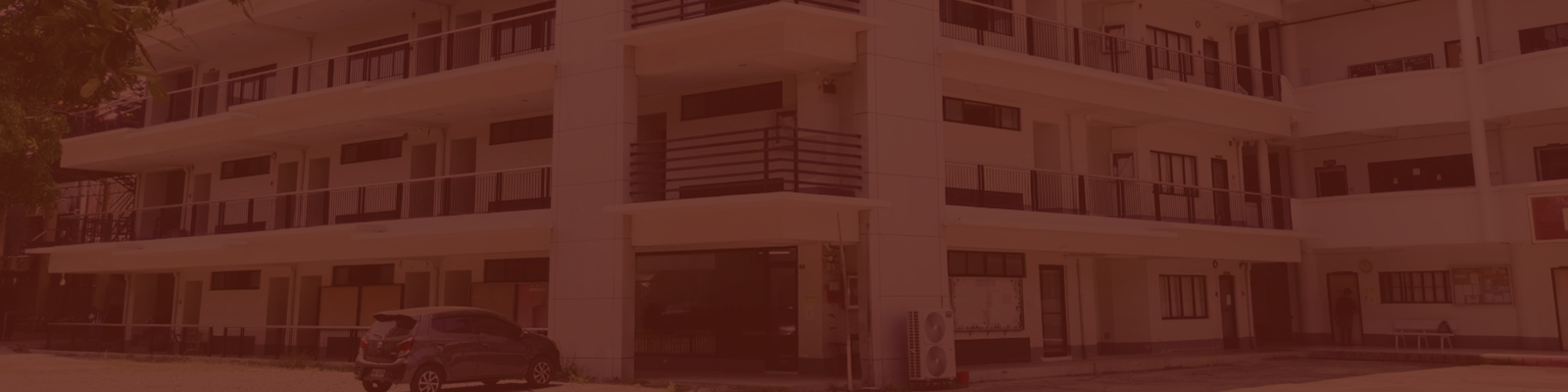
The Southern de Oro Philippines College, formerly the Southern Philippines Academy, is located at Julio Pacana Street, Licuan, Cagayan de Oro City. The College is a private, non-sectarian, co-educational institution committed to the development of knowledge, skills, and attitude through scientific and professional excellence and leadership for the individual to become a responsible, independent, self-reliant, and useful citizen.
The College (SPC) believes in the universality of man and will dedicate itself to the cause of national-building; hence, it shall assume the responsibility of instilling in the youth a true sense of Filipino values and culture as requisites in attaining national consciousness and unity.
The school was established upon the proposal of Engr. Apolinar Y. Garcia and Atty. Claudio M. Aguilar during a meeting of the Board of Directors of the then Bermuda Shopping Center, now known as Benito-Raymunda Realty Corporation, in August 1981. The idea was to develop the communal real properties of the late Don Benito R. Garcia and Doña Raymunda V. Garcia. The founders wished to contribute their best efforts toward the welfare and benefit of the youth through education.
On October 2, 1981, the school was formally approved by the incorporators, namely:
- Engr. and Mrs. Apolinar Y. Garcia
- Brgy. Captain and Mrs. George Y. Garcia
- Mrs. Adelina G. Nacalaban
- Mr. and Mrs. Venusto Y. Garcia
- Mr. and Mrs. Alfredo Y. Garcia
- Dr. and Mrs. Hernando T. Mejia
- Dr. and Mrs. Bernardo Resoso
- Atty. and Mrs. Claudio M. Aguilar
- Don Benito R. Garcia
On October 19, 1981, the school was registered with the Securities and Exchange Commission as Southern Philippines Academy, now Southern de Oro Philippines College, under SEC Registration No. 101440.
SPC Philosophy Statement
SPC provides a responsive education that empowers lifelong learners to excel professionally, conduct impactful research, and serve society with integrity and dedication
Vision
To be a leading learning institution that advances holistic instruction, high-impact research, and community extension, to produce faith-driven, more competent professionals who lead with integrity and transform society through dedicated service.
Mission
SPC is committed to the following:
- advancing facilitative teaching
- innovating applied research
- mobilizing community extension activities
- empowering lifelong learners to drive social progress
Core Values
As SPCians, we commit to:
Service & Social Responsibility
Transforming lives, uplifting communities.
Professionalism & Perseverance
Striving for quality, resilient through every challenge.
Character & Compassion
Leading with faith, serving with heart.
Goals
Our institutional goals serve as the roadmap for our academic community, ensuring every program and initiative drives holistic excellence and meaningful progress.
- Academic Excellence. To deliver an innovative, industry-responsive curriculum that develops professional competence and technical expertise.
- Productivity and Innovation. To expand institutional research productivity by supporting faculty and student publications, and translating academic findings into practical community application.
- Character & Spiritual Formation. To cultivate a faith-driven campus environment that nurtures ethical leadership, integrity, and strong moral character.
- Community Engagement. To foster a culture of service that actively responds to social challenges and drives community transformation.
- Lifelong Learning & Adaptation. To equip students with critical thinking, research skills, and a growth mindset to thrive in a rapidly changing world.
Objectives
To achieve these goals, SPC commits to the following actions during the academic journey:
- Modernized Instruction. Maintain high academic standards through continuous curriculum updates, modern technology integration, and industry partnerships.
- Research and Innovation. Cultivate a robust culture of inquiry by advancing applied and collaborative research that addresses real-world challenges, enriches academic instruction, and drives innovative solutions for the community.
- Student-Centered Support. Offer comprehensive guidance, career counseling, and mentorship to foster independence and lifelong learning habits.
- Active Service Learning. Integrate community outreach programs into the curriculum, allowing students to apply their professional skills to real-world social needs.


